

Join a global community of educators, leaders, and changemakers from over 25 countries for a transformative experience of purpose-driven learning, meaningful collaboration, and collective renewal in Islamic education.
In previous years, we impacted more than 1.4 million students and 116,000 teachers, alhamdulillah! This year, in shaa allah, we will go further.
Spaces are limited, register early to secure your place via the link below.
Registration fee includes:
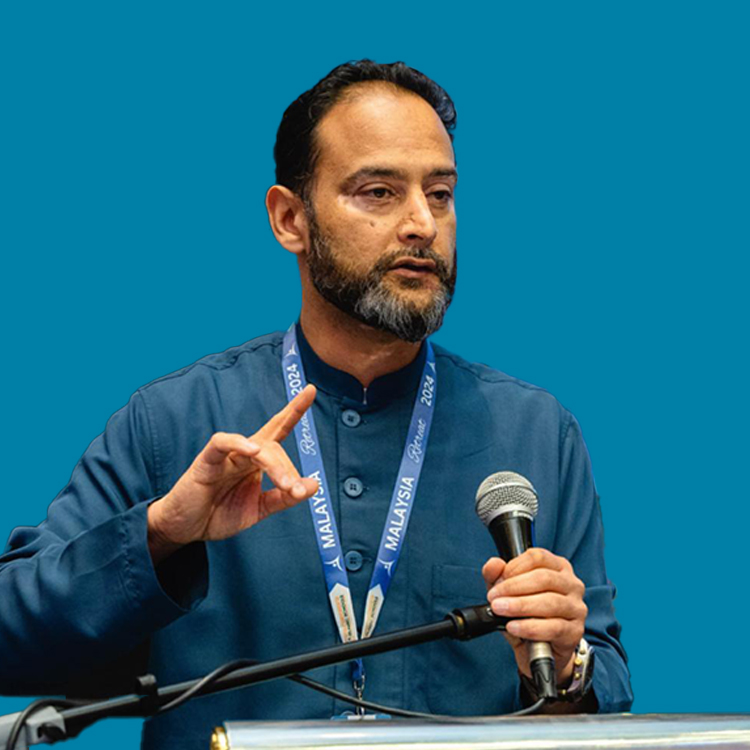
Dr. Nadeem Memon
An internationally respected scholar in Islamic pedagogy, teacher education, and faith-based schooling, Dr. Memon has inspired educators and institutions across the globe through his work in renewing Islamic education with purpose, depth, and relevance. As Associate Professor at the Centre for Islamic Thought and Education (CITE), University of South Australia, his voice has become one of the most influential in conversations around meaningful transformation in Muslim schooling today.
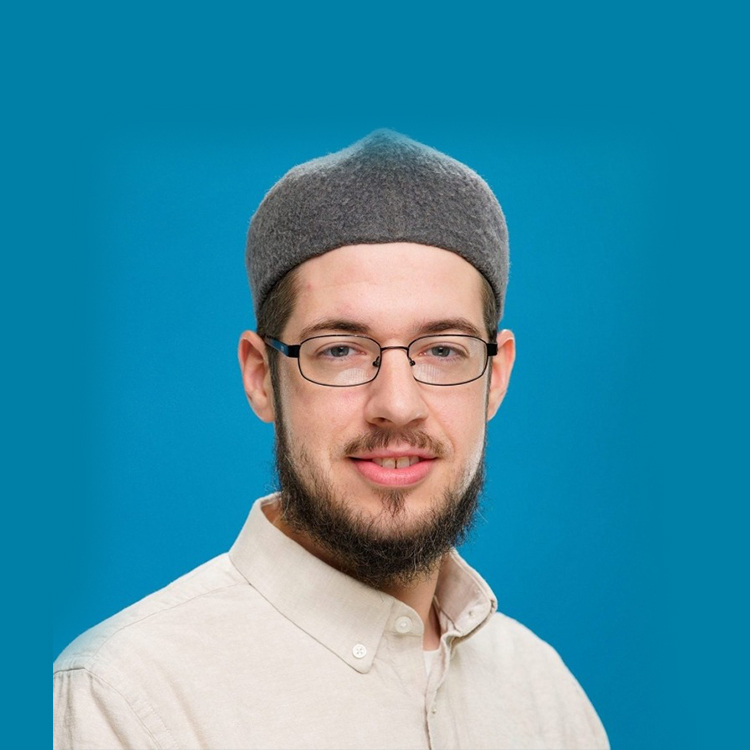
Imam Tom Facchine
A respected scholar, educator, and international speaker, Imam Tom Facchine serves as the Research Director of Islam and Society at the Yaqeen Institute for Islamic Research and as Resident Scholar in Utica, New York. A graduate of the Islamic University of Madinah, he is widely recognised for his work in Islamic thought, tafsir, and addressing the contemporary challenges facing Muslims with wisdom, authenticity, and relevance.
GRAND MERCURE JAKARTA KEMAYORAN
Jl. H. Benyamin Sueb Kav B-6, Superblok Mega Kemayoran,
Kota Baru Bandar Kemayoran,
Central Jakarta 10610
T +62 21 2260 1111
F +62 21 2260 2222
GRANDMERCURE.COM
Room Reservation – 5th GAIS Conference
Special Group Rates
—
📧 Step 1: Send a Reservation Email
Subject line: GAIS Reservation
Send to both:
Mega.MEILIAWATI@accor.com;
jakartaconference2026@gmail.com
📝 Step 2: Include the Following Details
Fill in this format:
▪️ Check-in Date:
▪️ Check-out Date:
▪️ Room Type: (KING) OR (Twin – Separate Beds)
▪️ Room Category: (Superior / Deluxe / Classic, etc.)
▪️ Guest Name:
▪️ ALL Accor Membership No: (Optional)
⚠️ Note: Do NOT select Single Room.
—
💳 Step 3: Complete Payment
1. The hotel will send you a payment link
2. Complete your payment via the link
3. Reply to the hotel with your payment confirmation to finalise the booking
—
VALIDITY: 20-JULY-2026
—
✅ All rates include:
* Breakfast for 2 guests
* 11% VAT
* 10% Accommodation Service Charge Tax
Rates:
” Superior 1,360,000
Deluxe 1,560,000
Classic 1.760.000
Executive 2,060,000″
Tajdīd in Practice: From Inner Renewal to Outer Transformation
Extending the journey • Deepening praxis • Honouring the tradition
Building on the momentum of the 2025 GAIS Conference, “Tajdīd: Inspiration to Impact,” the 5th Annual GAIS Conference invites the global Islamic schooling community – school leaders, governors, system leaders, scholars, academics, and educators from every part of the schooling ecosystem -into the next phase of renewal-one that moves from inspiration to implementation. In an era marked by uncertainty and rapid change, Islamic schooling continues to offer a site of purpose, healing, and hope. We often look to our leadership to guide us on that journey. Tajdīd, as a timeless principle in our tradition, has long guided the Ummah toward renewal grounded in Divine purpose.
At the heart of this gathering is a simple but profound conviction: meaningful renewal in Islamic schooling begins with the formation of the educator-and is sustained through leaders who cultivate this formation within their schools, shaping culture, practice, and direction. When the educator is renewed inwardly—through clarity of purpose, ethical refinement, and alignment with the Islamic worldview—this renewal naturally extends outward into classrooms, leadership, governance, and the culture of the school itself-often through the intentional work of those leading and guiding these spaces.” This conference invites us to take the next courageous step-to not only reflect on renewal, but to consider how it is led, supported, and brought to life within schools and systems to consider how renewal takes shape within the educator, within relationships, and within the daily realities of teaching, leading, governing, and learning.
A Journey of Praxis: Forming • Self-Forming • Transforming
Participants will engage in a developmental arc that invites deeper alignment between belief, purpose, and professional practice – towards faithful praxis—grounded in the spiritual‑ethical heritage of Islam and oriented toward the challenges and possibilities of our time.
Forming
Re-centering our work in an Islamic worldview and reconnecting with purpose, identity, belief, and the primary purpose – Tarbiyah – and foundational aims of education.
Self-Forming
Deepening inward refinement through reflection, muḥāsabah, and renewed clarity about our roles as murabbiyūn—regardless of whether we lead, govern, research, or teach.
Transforming
Exploring pathways for sustainable, principled renewal in pedagogy, leadership, governance, policy, research, community partnership, and whole-school culture.
More than theory. Across these three days, participants will feel, experience, and inhabit the journey-with space to consider how these insights can be translated into practice within their classrooms, teams, and schools, particularly through leadership and collective effort. Keynotes, Lightning talks, interactive workshops, halaqah-style dialogues, panels and reflective spaces, will encourage a heart-to-heart encounter with renewal, not just an intellectual one.
This conference is an invitation to move:
Together, we will explore how inner renewal leads to outer transformation – how the journey of the educator becomes the journey of the school-guided and sustained through thoughtful leadership, shared responsibility, and collective practice; and how faithful praxis becomes a lived legacy shaping our schools, our communities, and the futures of our learners.
Are we ready, together, to journey further into renewal?
Call for Abstracts
Call for Abstracts, 2026
Theme: Tajdīd in Practice: From Inner Renewal to Outer Transformation
Across three days, we invite the global Islamic schooling community—governors, leaders, teachers, scholars, and community partners—into a shared journey of practice that brings belief, purpose, and professional life into deeper alignment. In a time of uncertainty and rapid change, we turn from inspiration to embodied practice, exploring tajdīd not only as a concept but as a way of being, doing, and becoming across every layer of school life. Inner renewal within the educator gives rise to outer transformation in relationships, pedagogy, leadership, governance, and whole-school culture.
The conference design follows a developmental arc—Forming → Self-Forming → Transforming—as a guiding journey, not a rigid schedule. We especially welcome contributions that are lived, principled, and practical, and that invite participants beyond theory into hands-on, dialogic, and reflective encounters with renewal. We particularly value contributions that offer insights, tools, or models that can be taken back and implemented within schools—supporting leaders and teams in translating renewal into sustained practice.
Topics of Interest
We welcome abstracts that explore tajdīd in practice in diverse, context-grounded, and innovative ways. Submissions may draw on theory, research, practice, lived experience, or partnership work.
We value the rich diversity of educational contexts across the Ummah and invite contributions that show how tajdīd is taking shape within the distinct realities, challenges, and opportunities of your school, community, or cultural context. We warmly welcome contributions from diverse regions and voices across the Ummah, including early‑career practitioners and those drawing on diverse intellectual, cultural, and non‑Western epistemologies. If your work sits outside these areas but meaningfully aligns with the conference theme, we warmly encourage you to submit.
Topics may include—but are not limited to—the following thematic areas:
1. Renewal of Purpose and Worldview
Re‑centring education in an Islamic worldview or philosophy of education
Reimagining the aims, purposes, and telos of schooling
Explorations of Tarbiyah as a guiding concept and/or frame for education
2. The Inner Life of the Educator
The educator as murabbī: dispositions, virtues, and spiritual-ethical formation
Practices of reflection, muḥāsabah, tazkiyah, and inward refinement
The inner journey of teaching, leading, and governing
3. Relationships, Community, and Human Formation
Conceptions or ontologies of the learner and the educator
Relational, dialogic, and community-centred approaches
Partnerships that embody shared renewal
4. Embodied Wellbeing and Physical–Spiritual Integration
The integration of physical, emotional, and spiritual wellbeing in the tarbiyah of the educator, recognising ʿāfiyah, movement, and embodied practice as vital sites of tajdīd.
Embodied dimensions of human formation, including sport, physical culture, wellbeing, and the integration of body–heart–mind within Islamic schooling.
Sport, physical and health education, and wellbeing as pathways for spiritual‑ethical formation.
Novel or context‑specific approaches to physical–spiritual integration, including sport, movement, and embodied praxis as emerging sites of tajdīd.
5. Pedagogical, Curricular, and Professional Innovation
Pedagogical, curricular, or assessment renewal
Inquiry-driven professional learning or the research-practice nexus
Context-specific innovations emerging from schools or communities
6. Leadership, Governance, and Whole-School Formation
Coherent leadership, governance, and educator preparation
Translating belief into culture, climate, systems, and organisational design
Case studies of whole-school renewal or transformative practice
7. Emerging, Novel, or Provocative Directions
We particularly welcome bold, in-progress, or experimental work that pushes the boundaries of what tajdīd in practice might look like in contemporary Islamic schooling contexts.
We especially encourage contributions that illuminate unexpected questions, under‑explored areas, or context‑specific approaches that extend our collective understanding of tajdīd.
Presentation Formats
Workshops
Interactive, practice‑centred sessions (60 min) where participants do, make, design, enact, or practice together through experiential tools, strategies, and applied processes connected to tajdīd in practice.
Practice-Led Inquiry Sessions (New)
Short presentations (60 minutes) that share reflective, context-grounded inquiry into real challenges or innovations in teaching, leadership, research, or school renewal. These sessions connect authentic school experience with relevant research and tradition, highlighting how evidence, reflection, and tajdīd are shaping practice. Ideal for teacher-researchers, school leaders, research-practice teams, or academics working in partnership with schools.
Lightning talks
High‑impact (15 minutes) presentations that distill powerful ideas into their most compelling essence. These talks offer bold insights, principled provocations, or transformative questions that spark reflection and inspire renewed thinking. Ideal for sharing:
an emerging idea or conceptual insight,
a compelling classroom, leadership, or research moment,
a distilled story of practice or transformation,
a provocative question that invites the community into deeper inquiry.
Lightning talks should aim to ignite conversation, shift perspective, or open new pathways of thinking, making a concise contribution that resonates well beyond the short format.
Formatting requirements:
We ask that submissions refrain from promoting products or services. References to your school, organisation, or business are welcome only when they serve a clear scholarly, contextual, or pedagogical purpose.
Language: Submissions should be in English; Arabic terms, concepts, and sources are welcome where relevant.
Word document (.doc or .docx)
Times New Roman, 12 pt, double spaced
No footnotes or special formatting (bold, italics, underline, or special characters)
Early submissions are encouraged to support a timely review process.
Important dates Insha’Allah:
Milestone | Date |
CFP Release | April 14, 2026 |
Abstract submission deadline | May 30, 2026 |
Notification of acceptance | June 23, 2026 |
Full Presentation Due | July 23, 2026 |
Author registration deadline | July 30, 2026 |
Conference dates | October 4-7, 2026 |
GAIS 5th Annual Conference – Exhibitor Showcase 2026
An exciting opportunity awaits! Showcase your organisation, products, educational resources, or services at the GAIS Exhibitor Showcase taking place in Jakarta, Indonesia from 04–07 October 2026.
With 250+ delegates from 30+ countries, this is a unique platform to connect with decision makers – school leaders, educators, institutions, and global change-makers in Islamic education.
Limited spots available.
Partner With Purpose – 5th Annual GAIS Conference Sponsorship Opportunity
The GAIS Conference in Jakarta aims to bring together educators, school leaders and visionaries from across the globe to inspire growth, innovation and excellence in Islamic education.
We humbly invite you to partner with us through our sponsorship opportunities:
✨ Platinum Sponsor
✨ Gold Sponsor
✨ Silver Sponsor
✨ Bronze Sponsor
Your contribution is far more than financial support — it is an investment into the hearts, minds and futures of learners and educators worldwide. Every idea shared, every teacher empowered and every learner impacted becomes part of your Sadaqah.
Together, we can strengthen educational leadership, uplift institutions and create meaningful impact on a global level.
Click the link to make a difference today: https://forms.gle/LcW8tQDXJJiiU39d7
Click here to download the Sponsorship Brochure
Jazakumullahu Khayran for your support. 🌱
GAIS General Enquiries:
Admin Team | info@gais.network
Proposals and academic enquiries:
Dr. Leila Shatara | l.shatara@gais.network
Partnerships and collaborations:
Zeynep Alp | z.alp@gais.network